Introduction
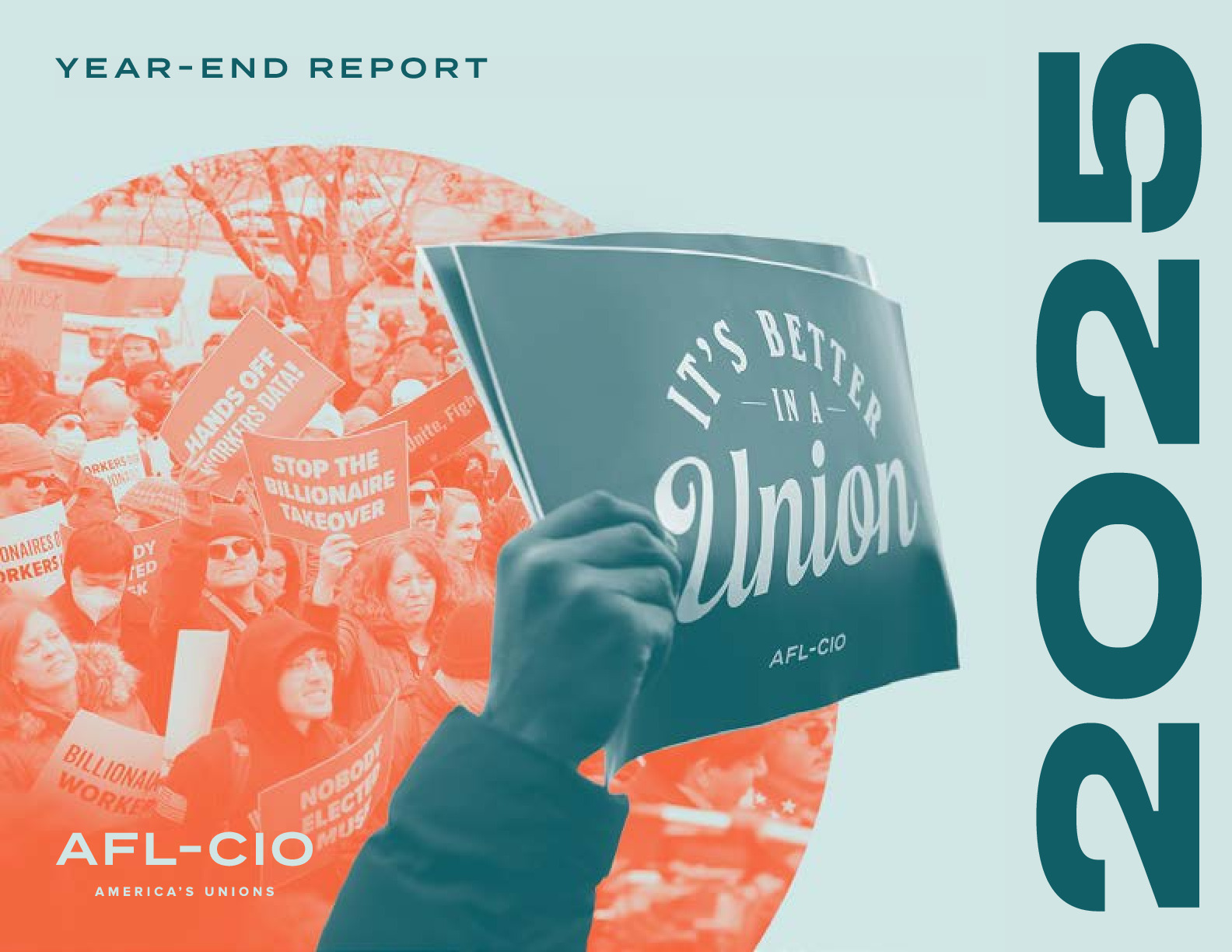
The labor movement has been tested like never before this year. Since Inauguration Day, the radical pages of Project 2025 and the fever dreams of America’s corporate billionaires have come to life with a relentless assault on working people.
Every day has brought a new challenge and attack: On federal workers. On our unions and collective bargaining rights. On the agencies that stand up for us and the essential services we rely on. On energy and infrastructure investments. On diversity and inclusion. On immigrant and LGBTQ workers. On foreign aid. On our democracy itself.
Their strategy is clear: Flood the zone. Exhaust us. Divide us.
But our federation of unions has never been more united, and we have never been prouder of this movement.
We Sounded the Alarm
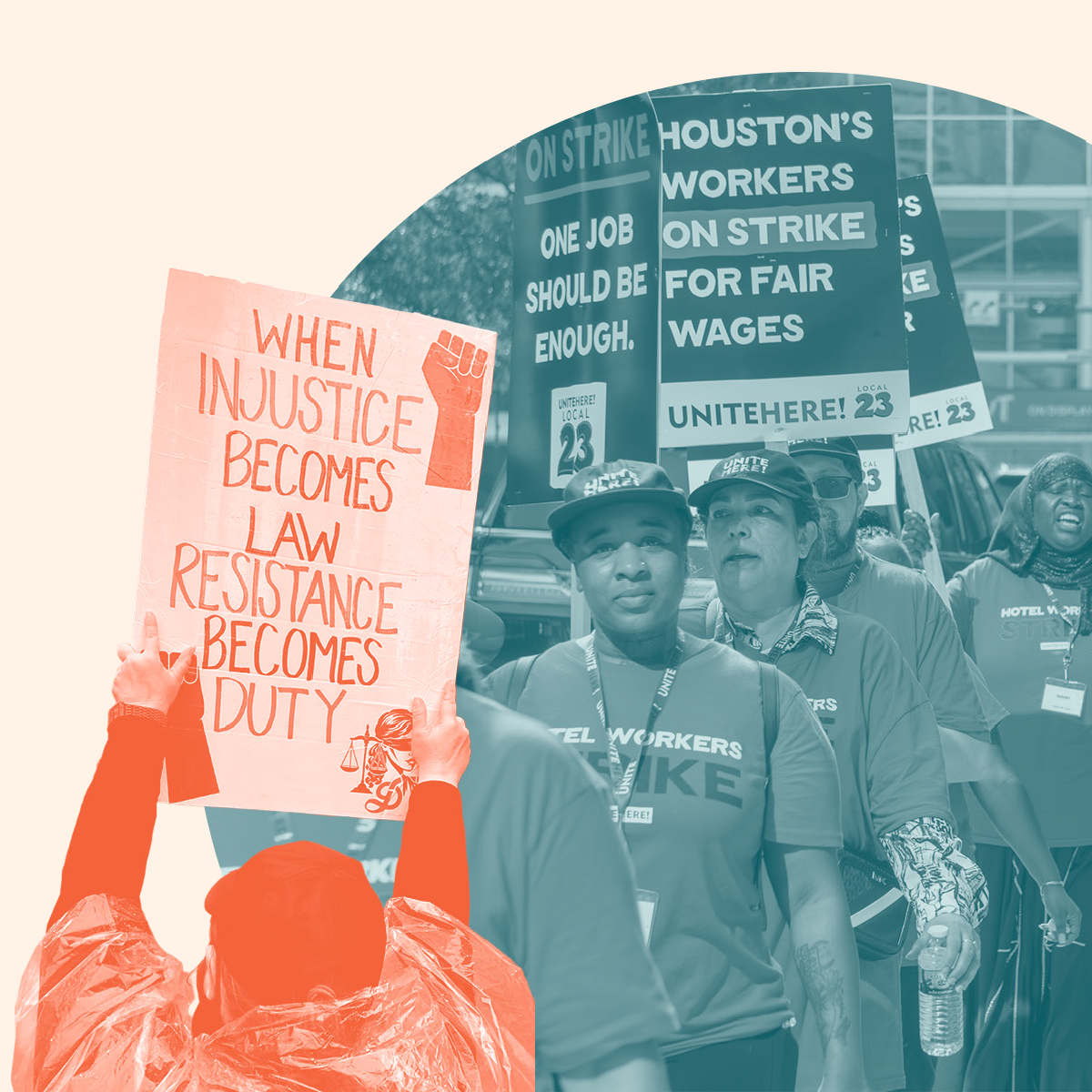
On the first day that Elon Musk’s unaccountable DOGE entered the Department of Labor, the AFL-CIO launched the Department of People Who Work for a Living (DPWL), our own agency to sound the alarm about the Trump administration’s anti-worker actions. The New York Times reported that DPWL was “one of the first organized efforts…to focus on the people affected by the work force cuts that the Trump administration is proposing.”
DPWL is a comprehensive rapid-response campaign, putting to work the trust and credibility of the labor movement—and the voices of our nearly 15 million members—to ensure that anti-worker actions are a political liability for the Trump administration.
We Fought Back in the Courts
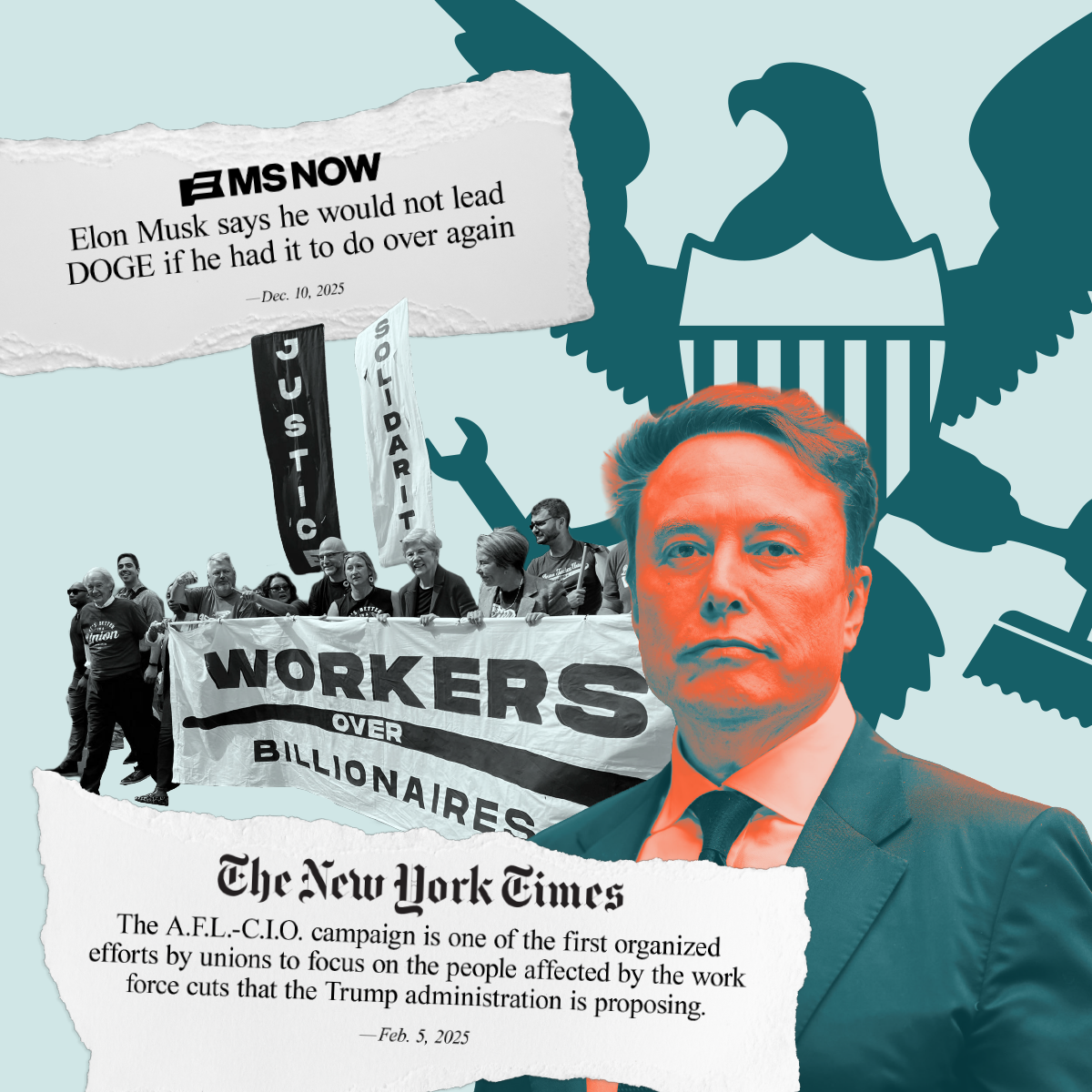
As soon as the 2024 election results were in, the AFL-CIO’s dedicated team of legal experts sprang into action to coordinate the massive and necessary legal response. With our affiliated unions and allies, the labor movement has filed or assisted on dozens of lawsuits challenging the Trump administration’s unlawful attacks on working people, including litigation to restore the collective bargaining rights of 1 million federal workers, defend the independence of the National Labor Relations Board, and protect key worker agencies such as the National Institute for Occupational Safety and Health and the Federal Mediation and Conciliation Service.
The AFL-CIO also led the formation of Rise Up: Federal Workers Legal Defense Network, a nonprofit organization launched earlier this year to connect thousands of federal workers fired or mistreated by DOGE with free legal assistance. Rise Up recently received the American Bar Association Labor and Employment Law Section’s Frances Perkins Public Service Award, which recognizes extraordinary commitment to providing free labor and employment legal education, outreach and empowerment.
We Mobilized on Capitol Hill and in State Houses Nationwide
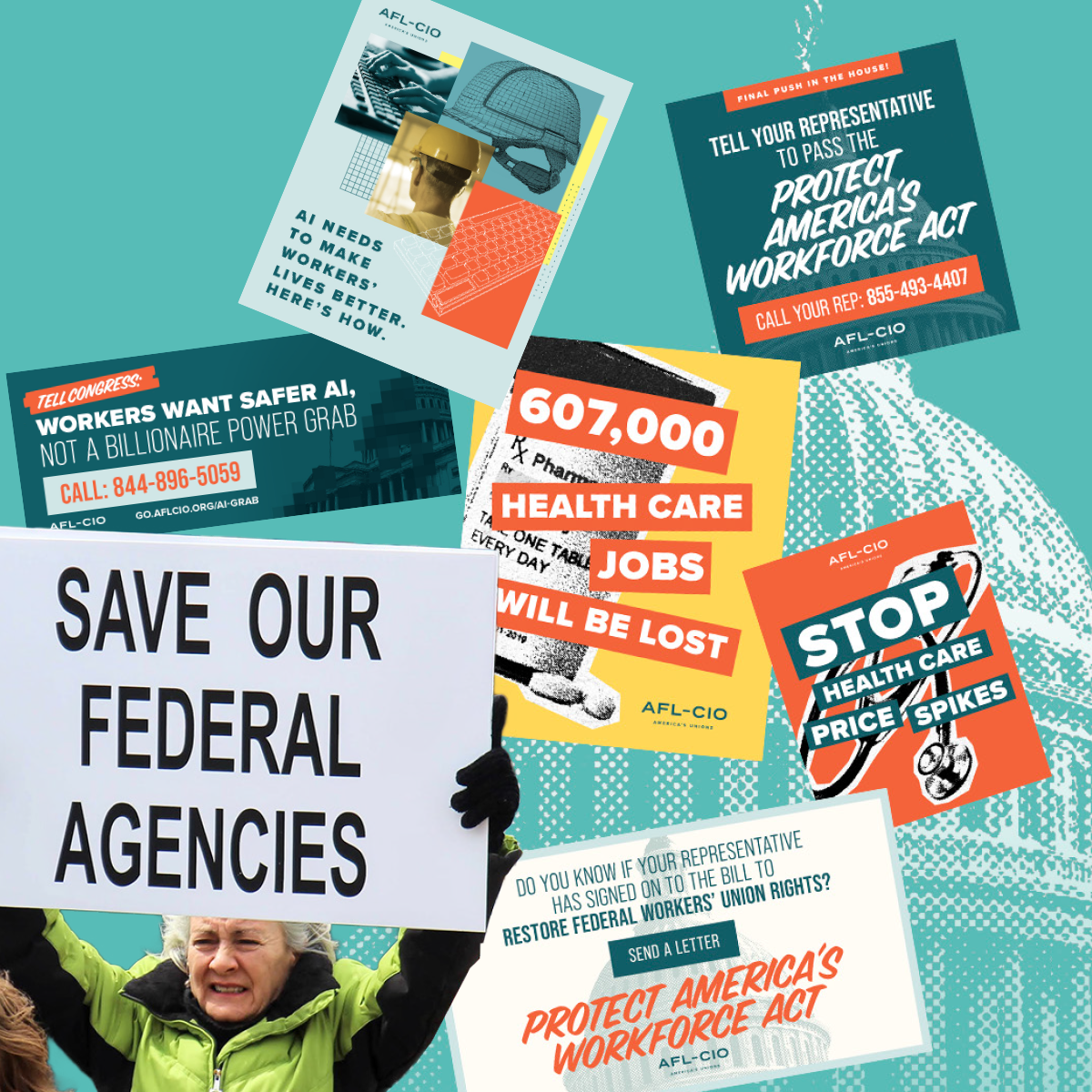
The AFL-CIO led the fight in Congress to support federal workers and stand up to major pieces of anti-worker legislation. Our advocacy team created the Federal Workers Action Hub, a coordinated effort of all affiliated unions with federal sector bargaining units that has met on a weekly basis since the start of the year. The hub became critical for information-sharing, collaboration across unions, strategy development and efficient use of resources across the many unions engaged in the fight to protect federal workers’ rights and jobs.
The hub mobilized to respond to the March 27 executive order stripping collective bargaining rights from 1 million federal workers, the single biggest act of union-busting in American history. This coordinated effort led to the introduction of the Protect America’s Workforce Act (PAWA), popular bipartisan legislation to reverse that executive order, which passed in the House of Representatives on Dec. 11. PAWA was the first successful vote in the House to overturn a Trump executive order in his second term.
We also coordinated efforts to fight the “big, ugly” budget reconciliation process, working with affiliated unions on several key priorities: protecting health care and food assistance, supporting clean energy tax credits, defending federal workers, and protecting the right to regulate artificial intelligence (AI). While the AFL-CIO and our allies could not stop all of President Trump’s destructive priorities, we kept further union-busting and a provision backed by Big Tech to preempt all state and local AI regulation out of the final bill.
And when Trump shut down the government for 43 days, the AFL-CIO led a simple, coordinated demand of our lawmakers: “Fund the government. Fix the health care crisis. Put working people first.” While not every lawmaker could be moved under the pressure of the Trump administration, our work squarely placed blame on those responsible for withholding federal workers’ paychecks and spiking Affordable Care Act insurance premiums.
As pro-worker policymaking in Washington grinds to a halt, we strategically have placed additional emphasis on policy at the state and local levels. Our state and local policy team has retooled to drive worker-centered priorities nationwide. Our new State Federation AI Task Force is becoming a model for how leaders across the country can come together to move pro-active legislation, share best practices and empower our federated bodies to advance a pro-worker AI agenda in their respective states.
We Drove Activism Across the Country
In early 2025, our field program began taking this pro-worker message from Capitol Hill to communities across the country, making it clear from the start that the Trump administration’s policies were hurting working families.
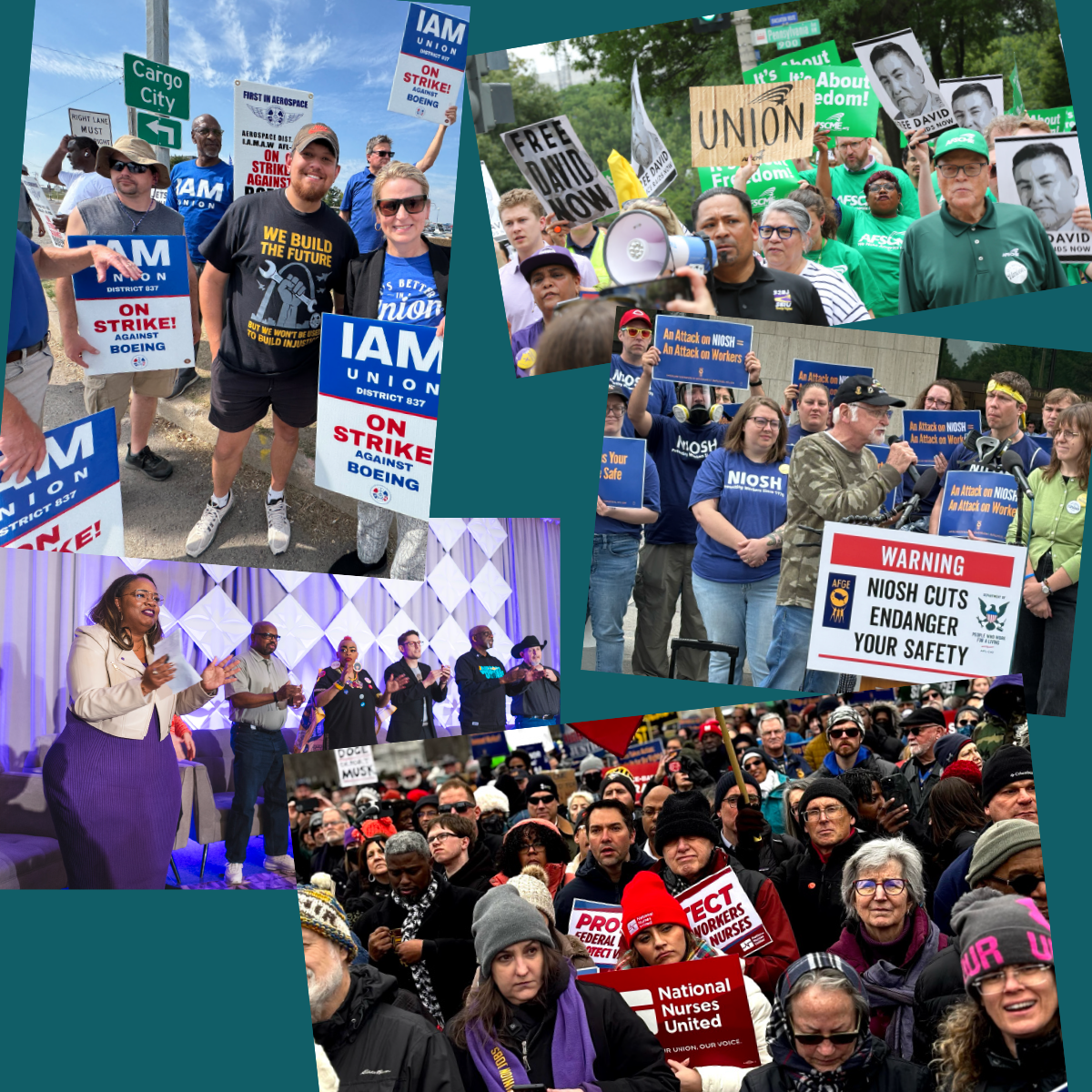
Throughout the spring, our federated bodies hosted dozens of field hearings under a DPWL banner. More than 1,500 union leaders, members and activists came together in solidarity and shared their personal stories about how the administration’s reckless cuts were impacting their communities, helping shape the public narrative and bringing the human impact to life.
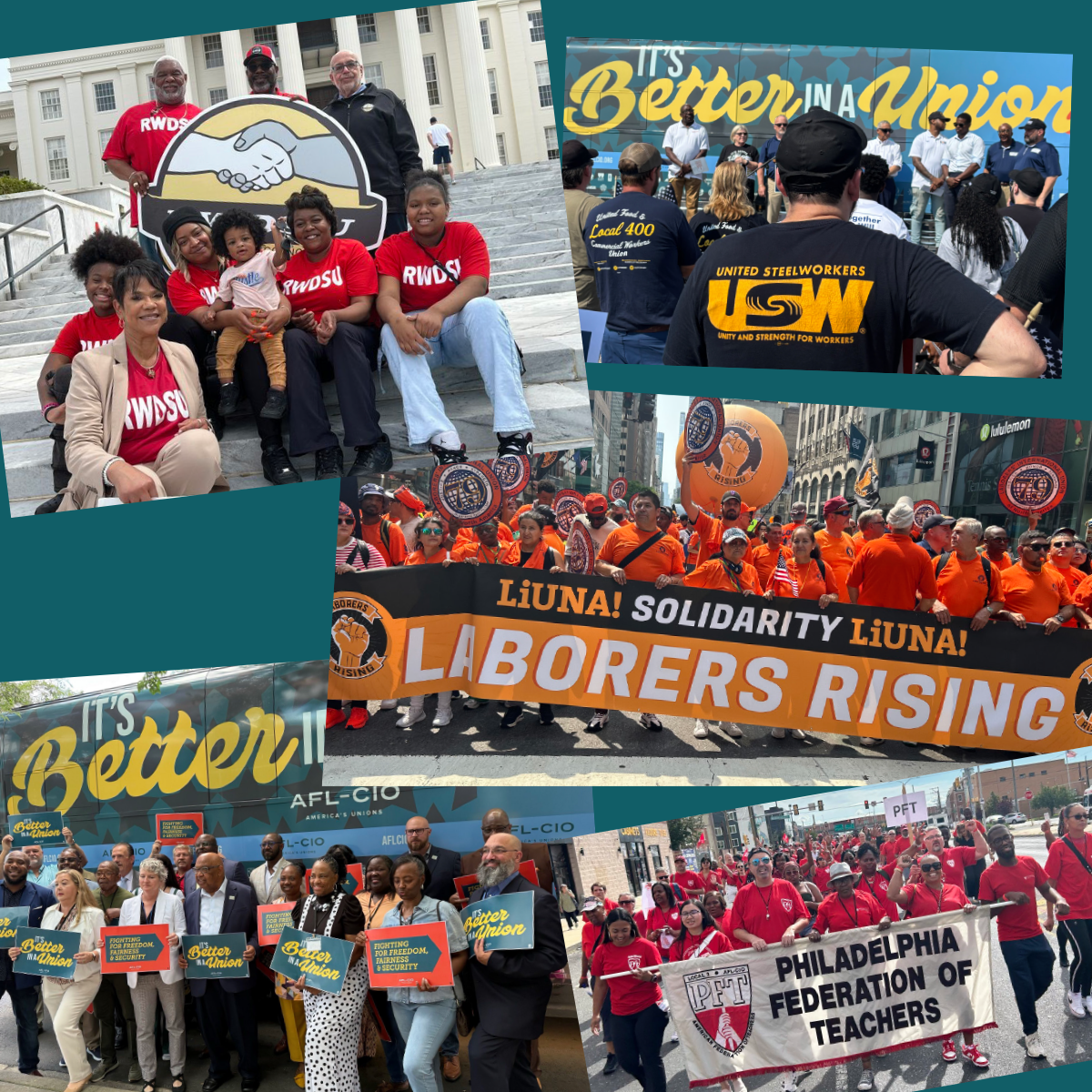
Our summer mobilization grew with the AFL-CIO’s “It’s Better in a Union: Fighting for Freedom, Fairness and Security” bus tour, as two buses crisscrossed the country to host 50 events in 32 cities across 20 states. From California to Maine, the bus tour highlighted key organizing and contract campaign fights, held members of Congress accountable at press conferences and rallies, and trained members and activists.
This collective, yearlong fight forward led to our biggest, boldest Labor Day in history, with 25 anchor rallies and marches in marquee cities, drawing hundreds of thousands of people protesting the administration’s anti-worker actions. There also were hundreds of Labor Day breakfasts, picnics and parades that brought unions and their members together with an action-focused message.
We Trained and Educated
The AFL-CIO training team adapted quickly to the changing political landscape, updating our Project 2025 curriculum and training thousands of leaders and activists in-person and virtually over the past year.
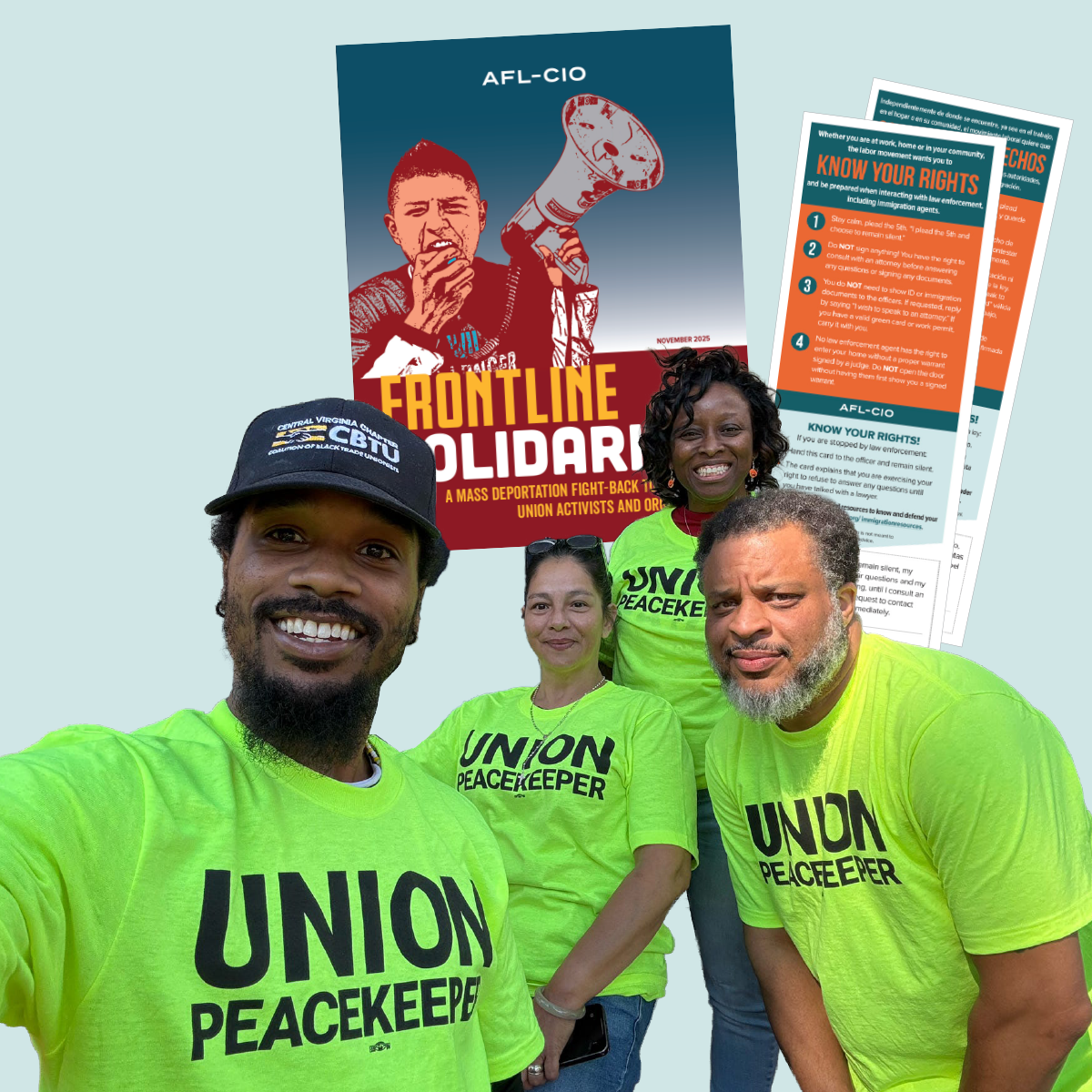
Our trainings focused on vital basic union skills, as well as digital safety, improved record retention and other key governance issues. With regular in-person and virtual trainings, including a two-day boot camp and bus tour events across the country, we prepared leaders on topics like nonviolent civil disobedience, peacekeeping and de-escalation skills.
In our policy fights, we armed our affiliated unions and federated bodies with a searchable 50-state database and corresponding trainings to educate communities on the local jobs impacted by cuts to the Inflation Reduction Act and the bipartisan infrastructure law’s clean energy projects. As the Trump administration repeatedly threatened to preempt all state AI laws that protect working people, the AFL-CIO’s Technology Institute rolled out a first-of-its-kind set of AI principles, an AI policy library for states and targeted programmatic training on AI.
Perhaps no education and training program was more important than our front-line solidarity program to help our brothers, sisters and siblings navigate the anti-immigrant agenda of this administration. We have distributed thousands of print and digital copies of our Frontline Solidarity toolkit, and released an updated version last month. Since January, our immigration team has directly trained more than 4,500 activists and organizers from at least 56 unions and more than 100 federated bodies across 48 states. And to date, we have distributed more than 320,000 Know Your Rights cards—now available in 28 languages—with requests continuing to pour in, particularly amidst threats of further militarization of our cities.
We Activated at the Ballot Box
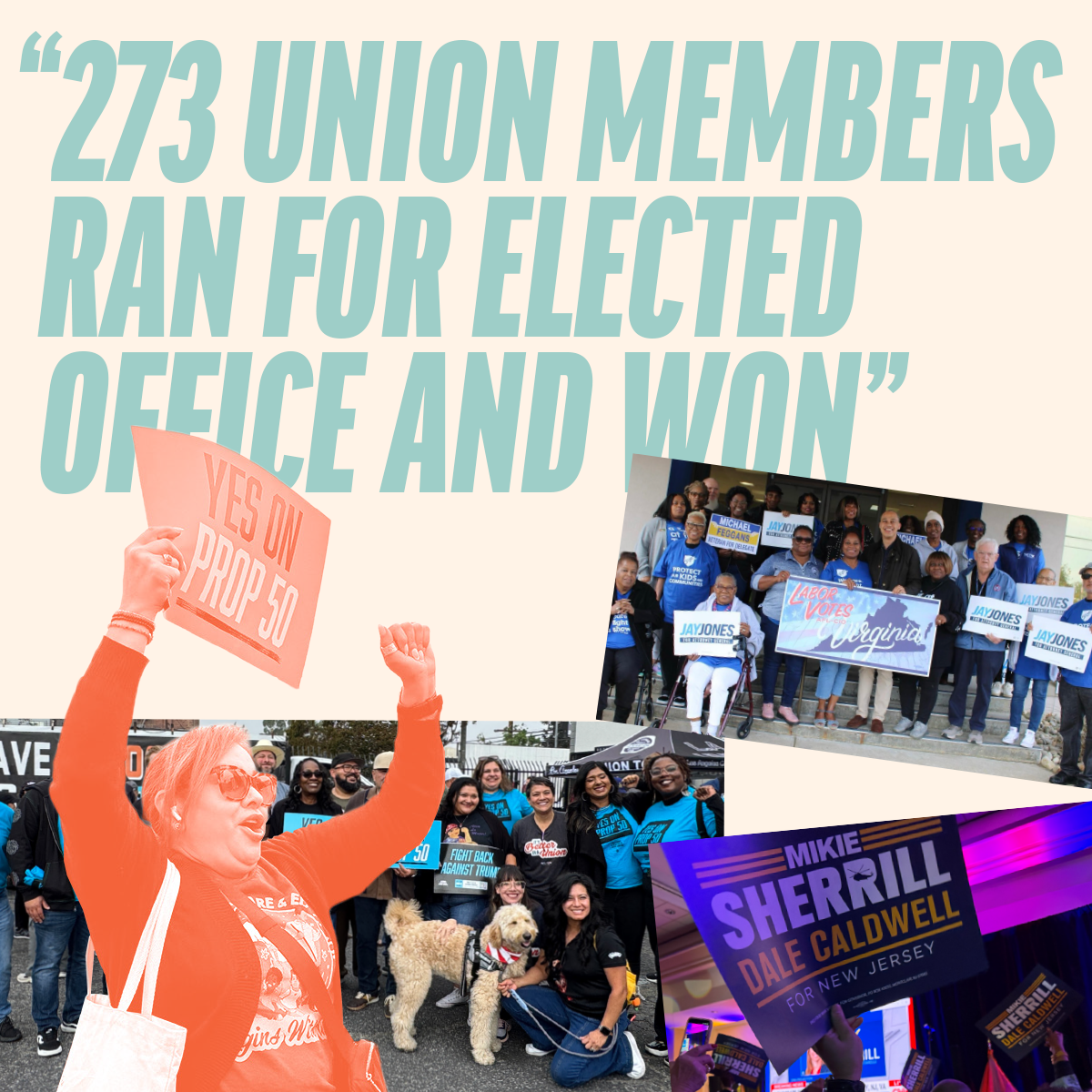
The labor movement and our issues were at the core of historic wins for working people on Election Day 2025. More than 14,000 volunteers mobilized union voters across 21 states, including key campaigns in New Jersey, Virginia, Pennsylvania and California. Overwhelmingly, voters across the country demonstrated that when candidates stand with workers and focus on the economic issues we care about, they win. From governors and state legislators to state judges and city officials, our movement made it clear that those in public office are successful when they commit to working with us to build an economy for the people, not the billionaires.
In this momentous 2025 off-year election cycle, 273 union members from 30 different unions ran for elected office and won, boasting a 78% win rate—up 8.5% from 2023. Union members won up and down the ballot, covering state, judicial, county, municipal and school board races. Among the key victories, we elected a union member as Virginia attorney general and 12 union members to state legislative offices. And this program continues to invest in the future: by the end of 2025, the National Path to Power program will have trained hundreds of people to run for office.
And We Kept Organizing
When the Trump administration ended direct dues collection for our federal worker unions and issued the executive order to gut collective bargaining rights, the AFL-CIO sprang into action. Our organizing team has worked with affiliated unions to set up phone banks and digital outreach, helping hundreds of thousands of federal workers switch to direct dues collection, signing up tens of thousands of new members, and supporting unions in the fight for their members.
Across our movement, unions kept organizing. The AFL-CIO Affiliate Contract Campaign and Strike Support Hub—working closely with hubs and departments across the federation—supported more than 100 campaigns and strikes in 2025, impacting some 1.3 million workers. These included the multi-union campaign by the Alliance of Health Care Unions to raise standards for 60,000 Kaiser Permanente health care workers; contract victories for more than 400,000 postal workers represented by the American Postal Workers Union (APWU) and the National Association of Letter Carriers (NALC); and the campaign by 12,000 Starbucks workers represented by Workers United, an SEIU affiliate—marking the largest Starbucks strike ever. And our Center for Transformational Organizing (CTO) provided strategic research and campaign capacity for 10 international unions and key community partners invested in states where CTO is organizing and building long-term power such as North Carolina, South Carolina, Georgia and Tennessee.
Through all this, the federation continues to grow. In 2025, we added three unions to our Sports Council: the National Hockey League Players’ Association (NHLPA), the Professional Hockey Players’ Association (PHPA) and the National Lacrosse League Players’ Association (NLLPA).
And at the 2025 AFL-CIO Dr. Martin Luther King Jr. Civil and Human Rights Conference in Austin, Texas, we welcomed the 2 million members of the mighty Service Employees International Union (SEIU) home to the federation, redoubling our efforts to build a thriving, healthy future for working people.
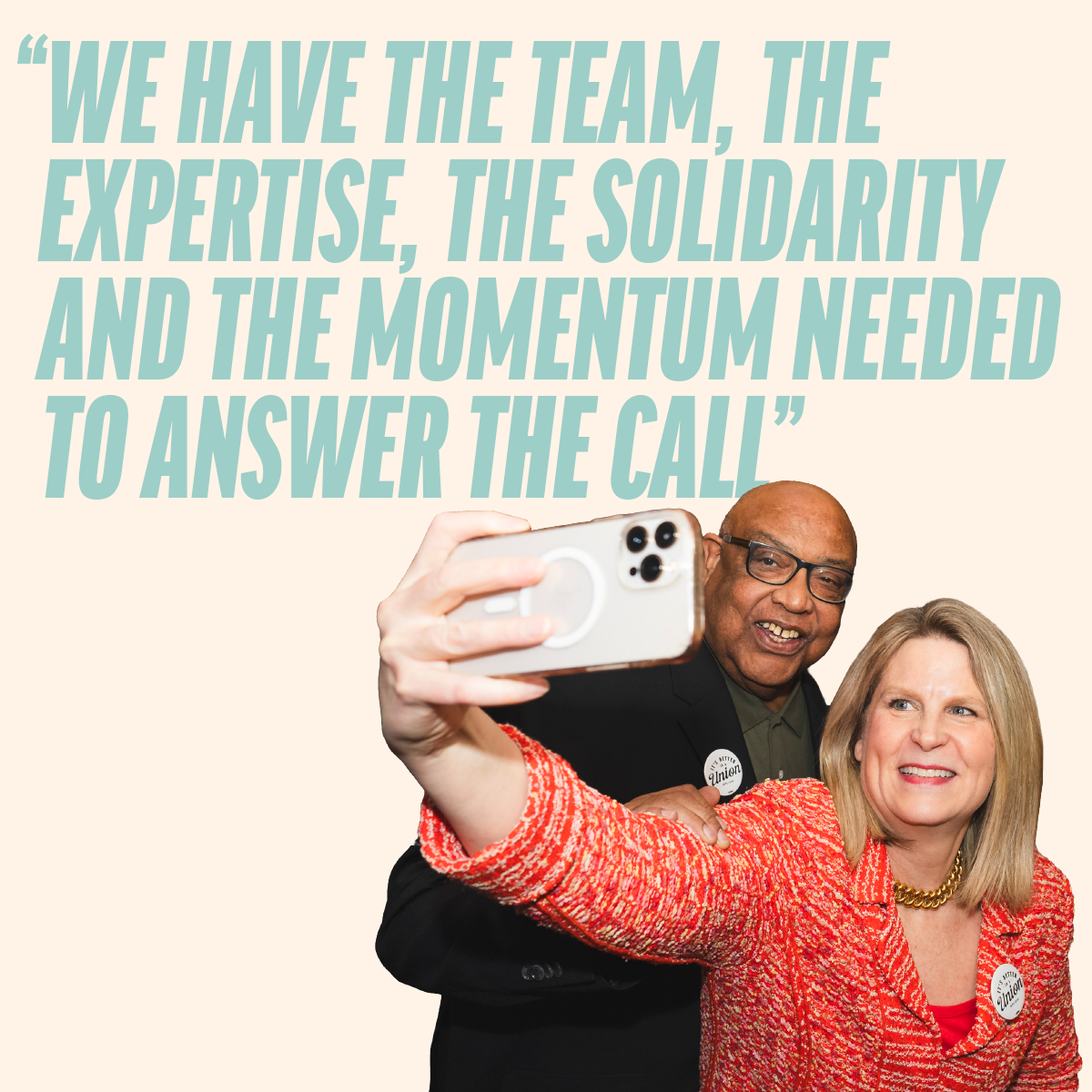
We know this hasn’t been an easy year for our movement or for working families. The deck has been stacked against us. But the labor movement has delivered—and we continue to deliver—for our members and communities. As we head into a critical midterm election year, we couldn’t be more certain that we have the team, the expertise, the solidarity and the momentum needed to answer the call—and win.
We end this hard-fought year deeply grateful for your courage, strength and spirit, and we look forward to continuing this work together in 2026 and beyond.
In solidarity,
Liz Shuler, President
Fred Redmond, Secretary-Treasurer