Blog
Get Email Updates
Civil Rights
Leaked Executive Order Will Harm Workers’ Rights on the Job
AFL-CIO President Richard Trumka issued the following statement in response to a leaked executive order from President Donald Trump's administration:
Immigration
Know Your Rights When Interacting with Immigration Agents
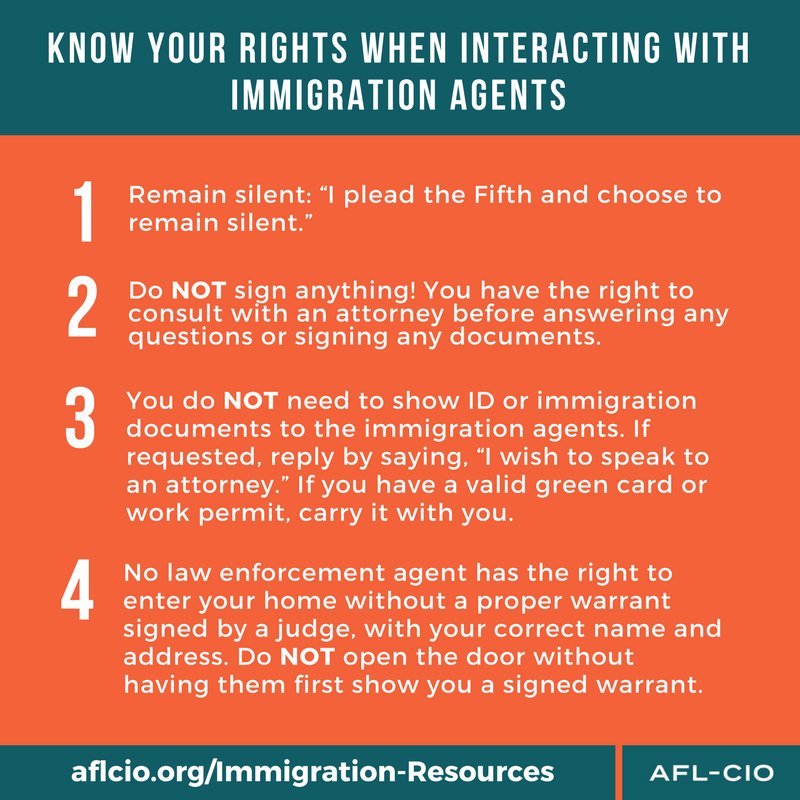
The 2016 election featured a heavy focus, in races at all levels of government, on immigration. President Donald Trump's post-election actions have signaled that this will continue. Here are some key things that working people need to know about our rights that will make sure that we have the resources to defend ourselves and our immigrant members and their families and communities in the event of workplace or community raids.
1. Do not answer questions. Tell the agent: "I plead the Fifth and choose to remain silent."
2. Do not sign anything. You are not required to sign anything without consulting an attorney first.
3. You are not required to show ID or immigration documents. If you have a valid green card or work permit, carry that with you, but tell the agent: "I wish to speak to an attorney."
4. Do not open the door without seeing a signed warrant. Law enforcement does not have the right to enter your home without a proper warrant, signed by a judge, with your correct name and address.
What Working People Want from a Supreme Court Nominee
It is expected that Donald Trump will announce his nomination for the Supreme Court seat previously occupied by Antonin Scalia. As always, working families take a keen interest in judicial appointments, as the courts have a significant impact on so many aspects of our lives, including our work lives. The Supreme Court rules on whether we are paid properly for the time we work; we have jobs to return to after caring for a sick family member; we are safe from harmful substances on-the-job; and we are protected from illegal firings when we choose to form unions.
Any person considered for Supreme Court Justice should have a record that reflects that he or she has upheld the constitutional values of liberty, equality, and justice for all. We also want Supreme Court Justices who are diverse in race, gender, national origin and age, and also diverse in professional background, including those who have at some point in their legal careers worked with average individuals, not just the privileged or business interests. So we would like to see a Supreme Court Justice with a history of representing unions and workers, or having served as a public defender, legal services lawyer or a consumer rights or women’s rights advocate. We need someone who can understand the issues of everyday Americans, not just the concerns of the wealthy and powerful.